
16-Jun-2026 by
Deckle Edge PaperHow Handmade Vintage Paper Is Crafted: From Pulp to Deckle Edge Finish
Handmade vintage paper has a beauty that ordinary machine-made paper cannot match. Its soft texture, natural fibers, aged appearance, and irregular deckle edges give every sheet a unique, timeless character. From wedding invitations and calligraphy to journals, art prints, and luxury stationery, handmade vintage paper is loved by artists, designers, writers, and stationery enthusiasts around the world.
But what makes this paper so special? The answer lies in the traditional crafting process. Each sheet is made with care, beginning with natural or recycled fibers and ending with a beautifully textured surface and feathered deckle edge finish.
In this blog, we’ll explore how handmade vintage paper is crafted from pulp to finished sheet.
What Is Handmade Vintage Paper?
Handmade vintage paper is paper made using traditional handcrafting methods rather than large-scale industrial machines. It is usually created from cotton rags, recycled fibers, or natural cellulose materials. The result is a strong, textured, eco-friendly paper with an elegant old-world look.
Unlike standard paper, handmade paper has natural variations in thickness, color, texture, and edges. These slight imperfections are what make every sheet unique. This is why handmade vintage paper is often chosen for premium stationery, luxury wedding invitations, calligraphy, journaling, certificates, and artistic projects.
Step 1: Selecting Natural and Recycled Fibers
The process begins with choosing high-quality raw materials. Many artisans use cotton rags, recycled paper, plant fibers, or other natural cellulose sources. Cotton fibers are especially popular because they create durable, long-lasting paper with a soft and premium feel.
Using recycled fibers also makes the paper more sustainable. Recycled handmade paper helps reduce waste while giving discarded materials a new life. This makes eco friendly vintage paper a thoughtful choice for customers who care about both beauty and sustainability.
The quality of the fiber plays an important role in the final paper. Strong fibers produce strong sheets, while softer fibers create a smoother, more refined texture.
Step 2: Preparing the Paper Pulp
Once the fibers are selected, they are cleaned, soaked, and beaten into pulp. This pulp is a watery mixture of softened fibers that forms the foundation of handmade paper.
The consistency of the pulp determines the thickness, texture, and strength of the final sheet. Skilled papermakers carefully control the mixture to achieve the desired finish. For vintage-style paper, natural pigments or dyes may be added to create warm antique tones such as ivory, cream, beige, or soft earthy shades.
This stage is essential because a well-prepared pulp leads to beautiful, durable artisan paper.
Step 3: Forming Sheets with a Mould and Deckle
After the pulp is ready, the sheet-making process begins. Artisans use a traditional mould and deckle to form each sheet by hand.
The mould is a fine screen that holds the fibers, while the deckle is a removable frame placed on top of the mould. Together, they help shape the paper sheet.
The mould and deckle are dipped into the pulp mixture and gently lifted. As the water drains away, the fibers settle across the screen and form a thin layer. The artisan carefully moves the mould to distribute the fibers evenly and create a balanced sheet.
This handmade process gives the paper its natural texture and individuality. No two sheets are exactly the same, which is one of the most appealing qualities of handmade vintage paper.
Step 4: Creating the Deckle Edge Finish
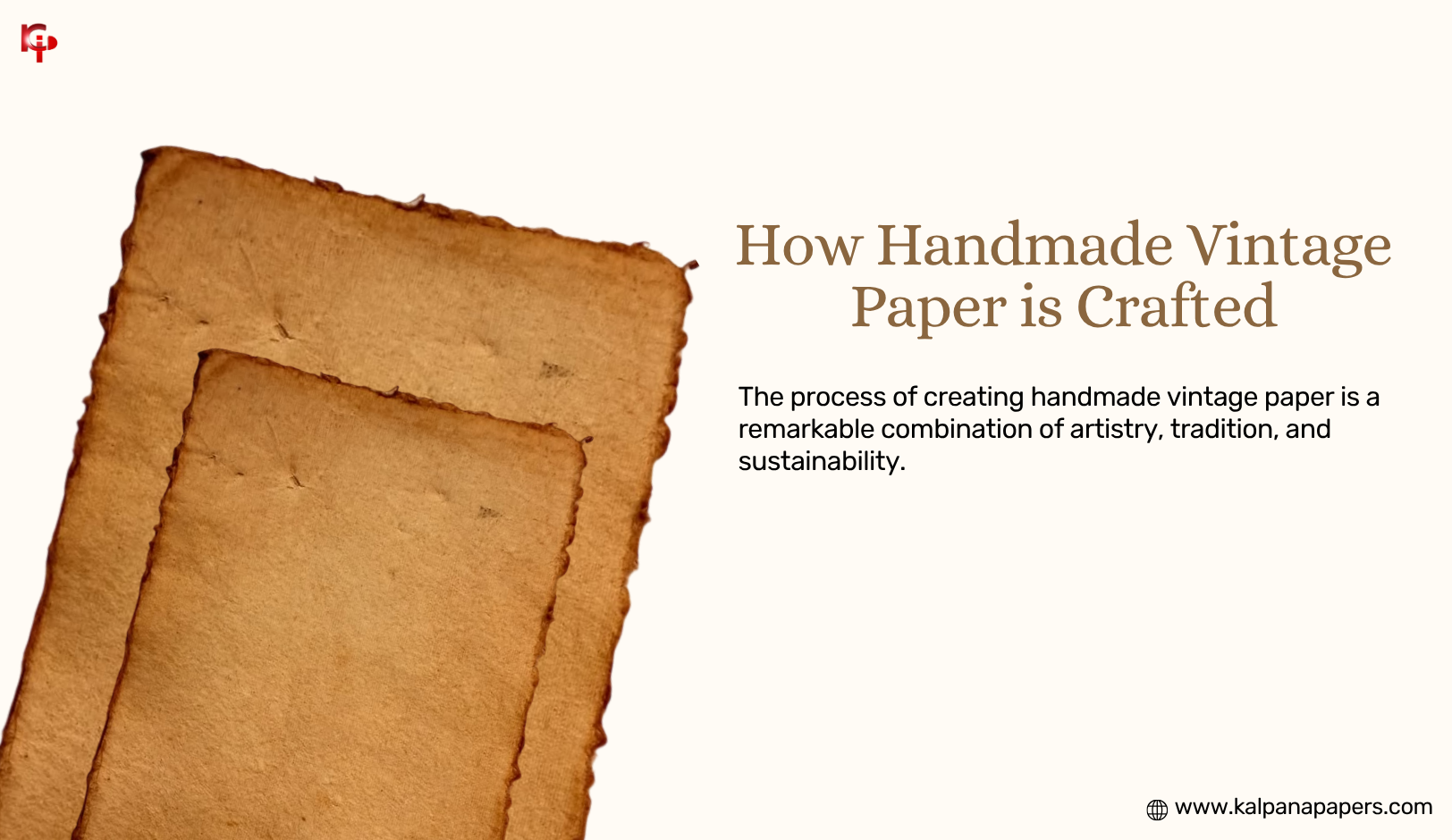
The deckle edge is one of the most recognizable features of handmade paper. Unlike machine-cut paper, deckle edge paper has soft, feathered, naturally uneven edges.
These edges are formed during the sheet-making process itself. As the pulp settles inside the mould and deckle, fibers spread gently toward the edges, creating an organic, irregular border. This gives deckle edge vintage paper its elegant handcrafted appearance.
Deckle edges are especially valued in wedding invitation paper, calligraphy paper, art prints, handmade stationery, and luxury branding materials. They add a sense of sophistication, authenticity, and craftsmanship to every project.
A true deckle edge is not simply a decorative cut. It is a sign of genuine handmade paper.
Step 5: Pressing the Wet Sheets
Once the sheet is formed, it is carefully transferred onto felt or another absorbent surface. This step is known as couching. Multiple wet sheets are stacked between layers and then pressed to remove excess water.
Pressing helps the fibers bond together, improving the strength and durability of the paper. It also helps create a smoother surface suitable for writing, printing, painting, and calligraphy.
At this stage, the paper begins to gain structure while still retaining its handmade texture and natural deckle edges.
Step 6: Drying the Handmade Paper
After pressing, the sheets are separated and dried. Many traditional papermakers prefer natural air drying because it helps preserve the organic texture and character of the paper.
Slow drying reduces warping and allows the fibers to settle properly. It also helps maintain the soft deckle edge finish that makes handmade paper so distinctive.
The drying process contributes to the final look and feel of luxury handmade paper. Once fully dry, each sheet becomes strong, usable, and beautifully textured.
Step 7: Finishing and Quality Checking
After drying, every sheet is inspected for quality. Artisans check the texture, thickness, color, surface finish, and edge formation. Sheets may also be sorted based on size, shade, or intended use.
Some handmade papers receive additional finishing to improve smoothness or writing performance. This is especially important for calligraphy paper, where ink flow and surface quality matter. A good handmade sheet should hold ink beautifully without losing its natural charm.
The final result is a premium paper that feels personal, artistic, and elegant.
Popular Uses of Handmade Vintage Paper
Handmade vintage paper is versatile and suitable for many creative and professional uses.
Wedding Invitations
Deckle edge wedding invitation paper is a popular choice for couples who want elegant, romantic, and memorable invitations. The handmade texture gives each invitation a luxurious and personal feel.
Calligraphy and Letter Writing
Calligraphers love handmade paper for its texture, strength, and classic appearance. High-quality calligraphy paper enhances handwritten letters, poems, place cards, envelopes, and artistic lettering.
Journals and Scrapbooks
Vintage journal paper adds warmth and character to personal writing, travel journals, memory books, and scrapbooking projects. Its aged look makes every page feel meaningful.
Art and Craft Projects
Artists and crafters use handmade craft paper for mixed-media art, painting, printing, packaging, gift tags, handmade cards, and decorative projects. Its texture adds depth and visual interest.
Premium Stationery and Branding
Luxury handmade paper is often used for certificates, menus, business stationery, thank-you notes, product packaging, and brand inserts. It creates a refined and memorable impression.
Why Choose Eco Friendly Vintage Paper?
Eco friendly vintage paper is a beautiful alternative to mass-produced paper. Because it is often made with recycled fibers, cotton waste, or natural materials, it supports more responsible production practices.
Handmade paper production can also require less energy and fewer industrial processes than conventional paper manufacturing. By choosing recycled handmade paper, customers support sustainability while still enjoying premium quality.
It is a perfect choice for people who value craftsmanship, natural materials, and environmentally conscious design.
Final Thoughts
Handmade vintage paper is more than just paper. It is a product of tradition, patience, and skilled craftsmanship. From selecting natural fibers and preparing pulp to forming sheets and creating soft deckle edges, every step adds character to the final piece.
Whether used for deckle edge paper invitations, vintage journal paper, calligraphy paper, handmade craft paper, or luxury stationery, each sheet carries a unique handmade story.
For anyone who appreciates beauty, texture, sustainability, and timeless design, handmade vintage paper remains a truly special choice.